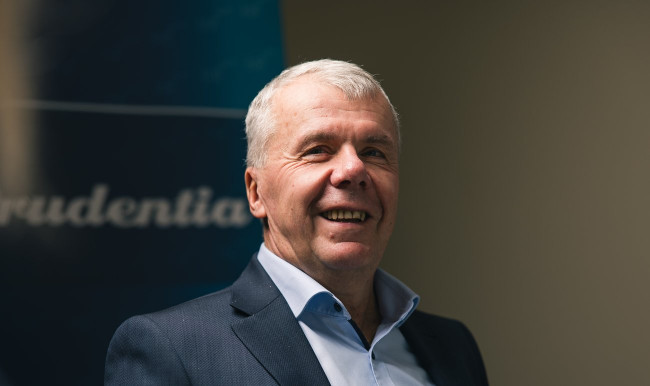
Tõnis Tamme
Partner and Attorney-at-Law at TRINITI Law Firm
TOP101: Estonia needs well-managed companies
The quality of corporate governance was also assessed whilst compiling the TOP101 comparison table of Estonia’s most valuable companies.
This was done using a number of different criteria, including gender balance in the company’s management and on the board; the presence of independent board members; the disclosure of financial results, risk assessment policies and other management information on the company’s website; the publication of key internal policy principles (e.g. conflicts of interest, code of ethics); the availability of corporate governance and sustainability reports on the website; information on the company’s strategic objectives; etc.
Wishing to emphasise the importance of high-quality governance in Estonian companies, the law firm TRINITI decided, as part of the TOP101 competition, to award a special prize to the company with the best corporate governance, which this year went to Luminor Pank AS.
In what ways did Luminor Bank stand out in the rankings?
With regard to Luminor’s corporate governance, it is worth noting that for three years running, its supervisory board has included at least two members independent of the shareholders, and there have been years when independent members have accounted for well over half of the bank’s supervisory board. This is an achievement that not many Estonian companies, including our other major commercial banks, can boast of.
Why is good corporate governance important?
Transparent corporate governance plays a very significant role in building and fostering trust amongst business stakeholders. Together with the accompanying corporate predictability and transparency, this opens doors for Estonian companies in both domestic and international markets.
Estonia’s advanced e-government infrastructure (e.g. the e-Business Register and digital signatures) supports good corporate governance by enabling decisions to be taken quickly and regardless of location, whilst ensuring fixed timestamps and public transparency in financial reporting.
How does transparent governance support the raising of capital and investment?
Investors, including foreign venture capital funds and institutional investors, do not merely invest in ideas with high commercial potential, but in properly managed legal structures. High-quality governance also ensures that the rights of minority shareholders are clearly protected, which is generally a prerequisite for attracting large-scale external capital.
Is it not sufficient to submit the annual report to the Companies Register?
In addition to the mandatory annual report, business partners and investors expect prompt and convenient access to up-to-date financial results and interim reports (e.g. quarterly reports) on the company’s website. This enhances the company’s credibility and accelerates its internationalisation.
Isn’t risk analysis a trade secret, and who actually needs these various internal procedures?
A well-managed company publishes an overview of its risk policy on its website – explaining how market, financial, cyber and operational risks are identified and mitigated. The website should also feature easily accessible, structured information on the company’s governance (organisational structure, biographies of directors and board members, and their specific areas of expertise).
A company’s ethical compass should also be made public. The conflict of interest policy and code of ethics published on the website demonstrate to business partners and customers that the company takes the risks of corruption and unfair competition very seriously.
As many Estonian companies are supply chain partners to large firms in Scandinavia and Western Europe, they too are expected to comply with high management standards. A deficient corporate culture may result in exclusion from international tenders. The absence of appropriate internal rules in areas such as anti-money laundering or background checks on new clients may result in a lucrative business relationship never being established.
What is the legal basis for all this?
The legal foundation for the governance of Estonian companies is based on the Commercial Code, which is supplemented by national and European Union regulatory frameworks.
The Tallinn Stock Exchange and the Financial Supervision Authority’s Code of Good Corporate Governance (HÜT) is Estonia’s most important set of recommended guidelines, which sets out standards for the equal treatment of shareholders, cooperation between the supervisory board and the management board, and the disclosure of information. Listed companies, as well as state-owned enterprises, adhere to the ‘comply or explain’ principle.
The Financial Supervision Authority’s (FI) guidelines on organisational structure and risk management are mandatory for financial institutions, but serve as a model for all companies when establishing internal control and risk policies.
The Gender Equality Act and EU directives regulate the promotion of diversity on companies’ governing bodies.
Management roles and responsibilities must be clear and understandable
The effective governance of any company is based on clear role descriptions, transparency and the allocation of governance responsibilities amongst governing bodies and their members:
- The general meeting of shareholders (the highest governing body): a forum for the company’s owners, which makes fundamental strategic decisions, such as amending the articles of association, distributing profits and appointing members of the supervisory board or management board. In accordance with modern best practice, the disclosure of majority shareholders and ultimate beneficial owners (UBOs) on the company’s website is a standard of transparency that prevents the risks associated with anonymous influence.
- Supervisory Board (strategic planning and oversight): mandatory in public limited companies (AS) and voluntary in private limited companies (OÜ). The Supervisory Board plans the company’s long-term activities and oversees the Management Board. The quality of governance is also enhanced by the presence of independent board members, who bring impartial expertise and have no ties to major shareholders or day-to-day management.
- Management Board (executive management): the day-to-day management of the company and its representation in transactions. Members of the Management Board are subject to strict duties of care and loyalty – they must act in the best interests of the company and be accountable for doing so.
The Management Board has a substantive duty of care
A professionally structured management system serves as the company’s primary internal control mechanism. Estonian law and case law impose severe penalties for management errors – a breach of duties or a delay in filing for bankruptcy results in personal joint and several financial liability for members of the management board.
Accurate documentation, transparent internal policies, a clear division of responsibilities and well-thought-out management processes offer the best protection for the management, demonstrating that decisions have been made diligently, purposefully and in good faith.
The quality of corporate governance in Estonian companies is on the rise
It is good to note that informed and well-considered corporate governance is increasingly valued in the Estonian business community, and that the governance of our companies is rapidly evolving from the mere formal compliance with bureaucratic rules into a comprehensive ecosystem of transparency, sustainability and ethics.
The special award for best corporate governance, presented to Luminor Pank AS by law firm TRINITI as part of the TOP101 competition for Estonia’s most valuable companies, is a strong recognition of one of Estonia’s leading banks for serving as a role model and setting the standard in this field.