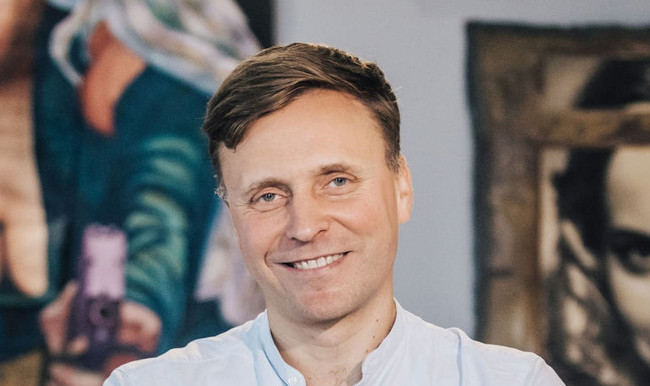
Indrek Uudeküll
Partner, Prudentia Advisory
TopTech 2026: cybersecurity and defence technology reshape the ranking
The combined value of Estonia’s 30 most valuable technology companies in this year’s TopTech ranking is EUR 26.4 billion. Wise and Bolt remain the clear leaders, but the ranking behind them is changing fast. Blackwall’s valuation has passed the billion-euro mark, Veriff is back in the table, and defence technology is now represented by seven companies. At the same time, several former software leaders have lost value. So where is value in Estonia’s tech sector actually being created?
Anthropic is a good example of how global valuations are shifting. According to Reuters’ September reporting, the company is discussing an IPO at a valuation of around USD 2 trillion – almost eleven times last year’s level. If the IPO goes ahead, we will see whether Jaan Tallinn’s minority stake is worth more than this year’s entire TopTech ranking combined. The picture in Estonia is more modest: over TopTech’s six years, only a handful of companies have grown faster than average, and the total value of the TOP 30 has grown by no more than five percent since 2021.
Behind the leaders’ decline, a more varied picture
Wise is valued at EUR 10.98 billion this year and Bolt at EUR 7.09 billion. Together they account for 68.3 percent of the TOP 30’s value, but their combined value fell by around 15 percent over the year. The top five hold 84.6 percent of the ranking’s total value, so a revaluation of just a few large companies has a strong effect on the overall result.
Blackwall’s breakthrough and Veriff’s return
This year’s biggest riser is Blackwall, whose value grew from around EUR 221 million to EUR 1.03 billion, or by 368 percent. It moved up from ninth to fifth place. Blackwall provides security infrastructure: its GateKeeper solution filters out malicious traffic before it reaches the customer’s applications. Blackwall shows that when valuing a tech company, you need to look at the product, the sales channel and the economic benefit to the customer all at once.
Veriff returns in third place with a valuation of EUR 1.81 billion. Like Glia, Testlio and Starship Technologies, Veriff does not publish its financials because its headquarters are in the US. As a result, it has not been possible to value these companies objectively every year. The combined value of Blackwall and Veriff, EUR 2.84 billion, exceeds the EUR 1.70 billion value of the ranking’s B2B SaaS companies.
The rise of defence technology is no longer about a few companies
Defence technology is represented in the TOP 30 by seven companies with a combined value of EUR 1.07 billion – by number of companies, the largest sector in the ranking. Frankenburg Technologies, Threod, Milrem and DefSecIntel have been joined by Hevi Optronics, KrattWorks and Ark Robotics. Frankenburg’s value grew by 89 percent (EUR 283 million), Threod’s by 45 percent (EUR 245 million) and Milrem’s by 27 percent (EUR 177 million). DefSecIntel, however, lost 47 percent of its value, falling to around EUR 101 million. Even in defence tech, each company must be judged on its own merits, not just on the sector’s outlook.
For Estonia, this means that alongside technology we increasingly need to talk about manufacturing, testing and delivery capacity. Threod CEO Arno Vaik stresses that size matters in the defence industry: customers need confidence that a supplier can support its systems for decades. Still, Estonia’s small size need not be a limitation. “We don’t have to build the whole world – it’s enough to build a few parts that are critical to that world,” Vaik said.
Winners and losers in software
The combined value of the four companies classified as B2B SaaS fell by 32.4 percent. The largest impact came from Pipedrive, but Toggl also lost value (37 percent), while Scoro grew by five percent. In fintech, Wallester stood out, with its value up 46 percent to EUR 139 million. The values of software development firms Nortal and Helmes rose by 7.4 and 1.4 percent respectively.
AI is changing the software business. When building features becomes cheaper, or customers need fewer user accounts, it puts pressure on pricing and licence revenue. At the same time, AI can improve a product and make it more profitable.
When valuing companies, it is worth separating those who develop AI technology, those who build their own products on top of it, and those who use ready-made tools. Value can be created in all three groups, but it lasts and is shared differently. For an investor, it is therefore not enough to ask whether a company uses AI. The question is how it increases sales or profitability, and who ultimately keeps the productivity gains – the service provider or the customer.
New entrants and the longer road for deep tech
There are four new companies in the ranking: AI company Zobi (EUR 150 million), Hevi Optronics (EUR 117 million), KrattWorks (EUR 97 million) and Ark Robotics (EUR 52 million). Montonio (EUR 72 million) also returned. The combined value of Skeleton, Elcogen and Stargate Hydrogen, EUR 826 million, remained essentially unchanged over the year. An unchanged valuation is not the same as an unchanged business: in energy and industrial technology, the road to repeat orders and profitable production simply takes more time and capital. Over six years, the ranking has seen many fast risers and fallers, so it is unwise to draw firm conclusions from a single year.
M&A market: eleven deals in a year
According to Prudentia Advisory’s review, 11 M&A deals were completed in the Estonian tech sector over the past year. Messente and Zone Media show that companies grown without VC funding can also achieve a strong exit: RingCentral acquired Messente at an expected enterprise value (EV) of around EUR 15.7 million, and Your.Online acquired Zone Media for around EUR 21 million, or roughly ten times EBITDA. VC-backed scale-ups have become buyers themselves: Veriff acquired Vespia, Scoro acquired Envoice, Pipedrive acquired Outfunnel and Ringy acquired Upgreat. Three deals were in defence technology – Germany’s Quantum Systems acquired SensusQ and a 60% stake in Hevi Optronics, and Canada’s Vosker acquired the Defendec group. Not every story ends well: Ready Player Me, which had raised EUR 62 million, was sold to Netflix without all investors getting their money back.
How do we bring the next wave of growth to Estonia?
Without Wise and Bolt, the remaining 28 companies have a combined value of EUR 8.37 billion. This group includes cybersecurity, software, defence technology, energy and artificial intelligence – Estonia’s next growth story does not have to come from a single sector. This requires an environment that suits both software development and the manufacturing of complex products: growth capital, international talent, a predictable business environment, testing opportunities and well-functioning public procurement. The state can be a demanding first customer, where a proven solution helps a company reach export markets.
It is equally important to attract foreign technology companies and their development centres to Estonia. What matters is not the registered address, but where knowledge, decision-makers and high value-added jobs are based.
TopTech 2026 shows both slowing growth among the established leaders and the rise of strong new companies. Estonia’s next challenge is to create conditions where such companies want not only to start here, but also to scale here.